
TL;DR
By introducing self-serve payment recovery and clear payment failure notifications, we significantly reduced order cancellations caused by failed payments and recovered £724k (UK) and $1.26m (BR) in revenue in a single month.
Cancellation drop rates:
Voy BR: from 28% → 14%
Voy UK: from 5% → 2%
This work laid the foundation for a scalable payments experience and marked the first major initiative of the newly formed Payments Squad.
Let me set the scene first
Voy is a healthtech company offering subscription-based treatments across multiple markets. Payments are mission-critical: if a payment fails, treatment stops and so does the revenue.
As the business scaled, payment failures became a growing problem:
Failed payments weren’t clearly surfaced to users
Recovery relied heavily on automated retries
After 30 days of failed attempts, subscriptions were cancelled automatically
This meant:
Customers were losing access to treatment
The business was losing revenue
Support teams were firefighting issues that users could have solved themselves
To address this, the company formed a dedicated Payments Squad for the first time, bringing together Product, Design and Engineering to rethink the entire payment recovery experience.
My role
As the Product Designer of this Squad, I:
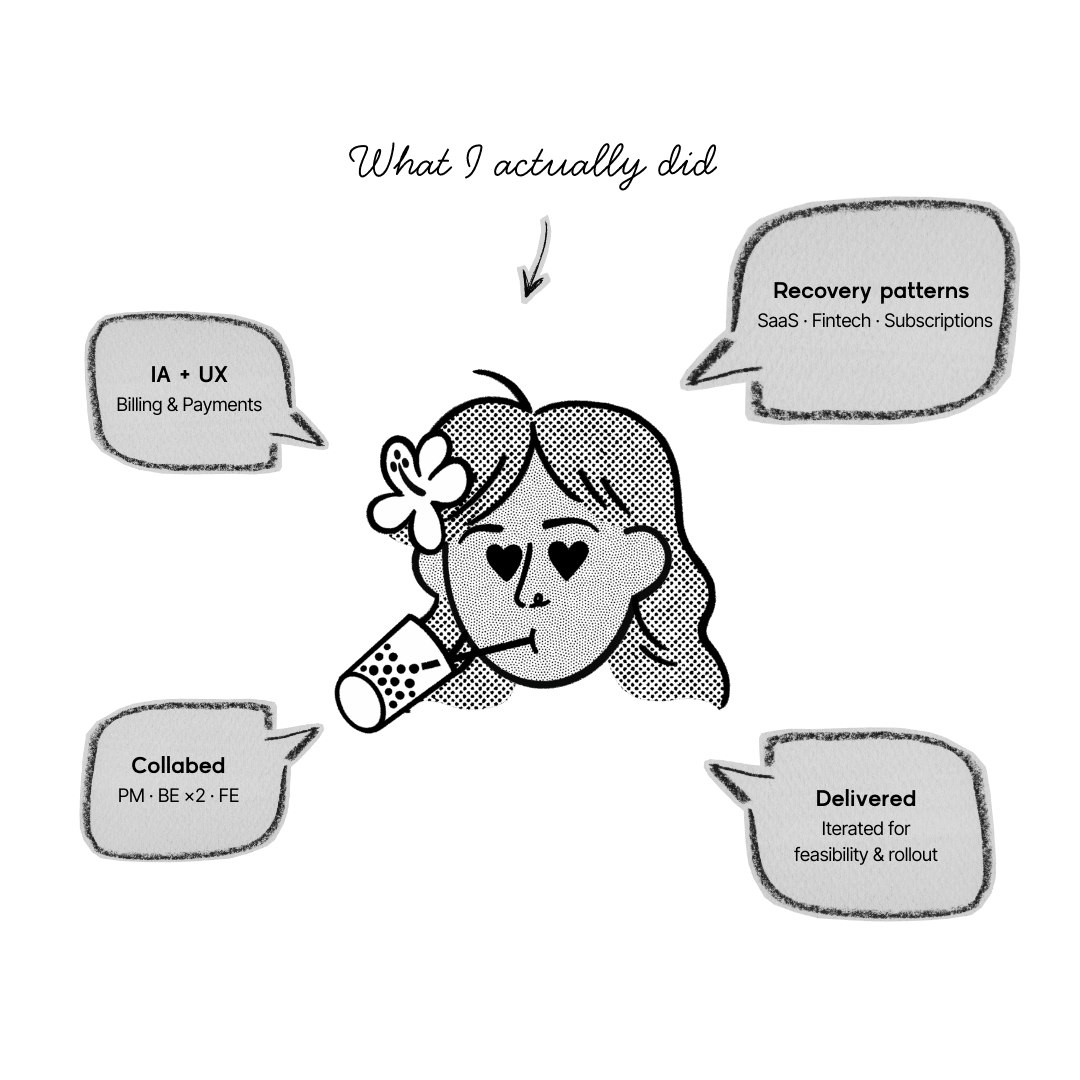
Researched the best-in-class payment recovery patterns across SaaS, fintech and subscription products
Defined the IA and UX for the new Billing & Payments page
Worked closely with 1 PM, 2 Backend Engineers and 1 Frontend Engineer
Iterated designs based on technical feasibility and rollout strategy across markets
This was the first time a feature would launch across categories and brands.
The problem
Once a payment failed, users had very little visibility or control.
What was happening:
The system attempted auto-retries in the background, and at that moment those retries where not "smart" ones
Users were often unaware their payment had failed
There was no place to manage payment methods or retry a failed payment
After 1 month, the order was cancelled
Hypothesis
If users are:
Clearly informed when a payment fails
Given control to retry with a preferred payment method
Provided with a dedicated, easy-to-find space to manage billing and payments
Then:
Fewer orders will be cancelled
Recovery rates will increase
Support dependency will decrease
Seems big of an issue, right? Let's dive into the solutions 👇
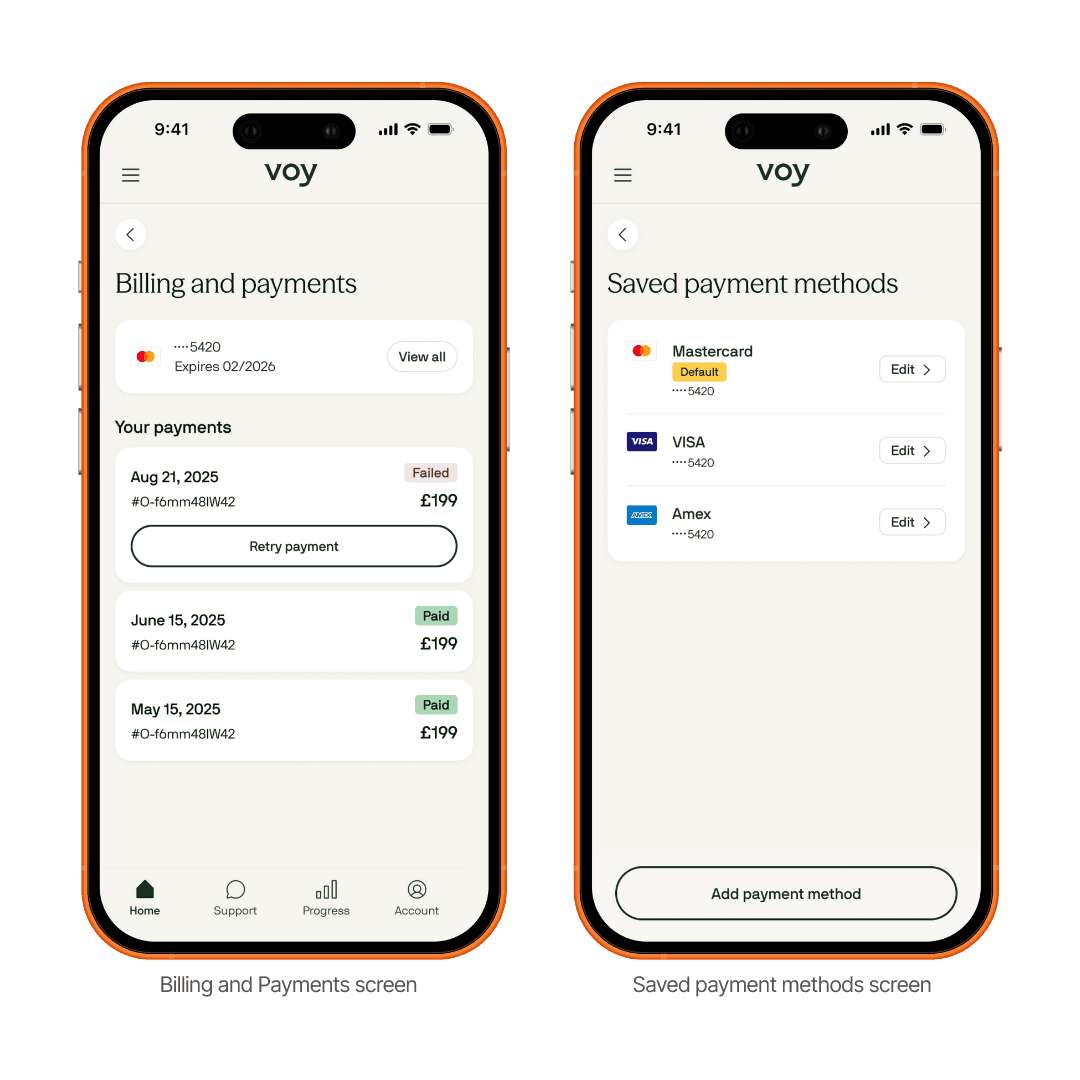
We created a new “Billing & Payments” space
We introduced a dedicated section in the web app where users could:
View all saved payment methods
See their default payment method
Check their payment history
Identify a failed payment
Retry a failed payment using a method of their choice
This shifted payments from a hidden system process to a transparent, user-controlled experience.
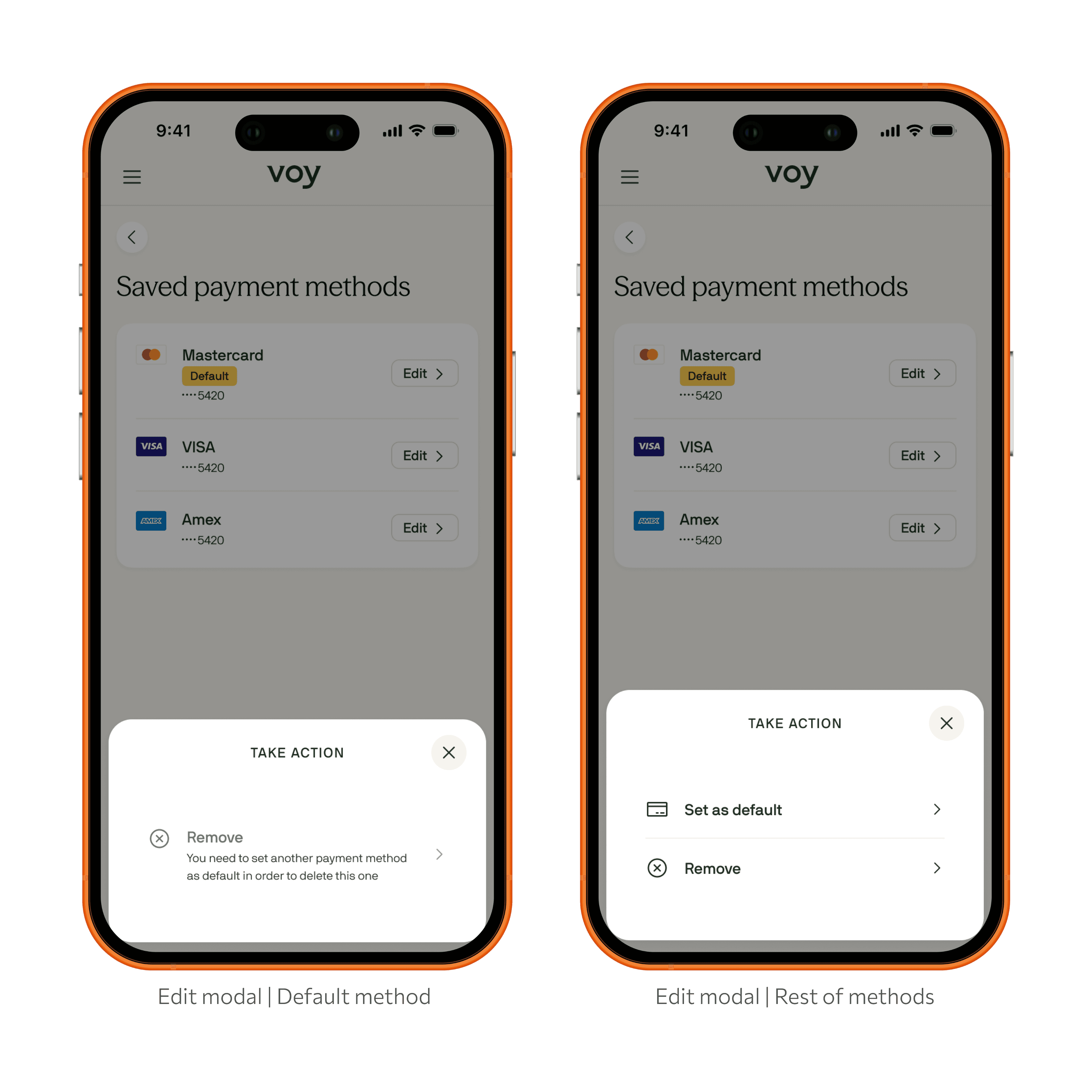
We enabled self-serve payment retries
Instead of waiting for auto-rescue to succeed (or lets be honest..to "fail silently"), users could now:
Act immediately after a payment failure
Switch payment methods without contacting support
Recover their orders before cancellation thresholds were reached
This was especially impactful for users with:
Expired cards
Insufficient funds
Bank authentication failures
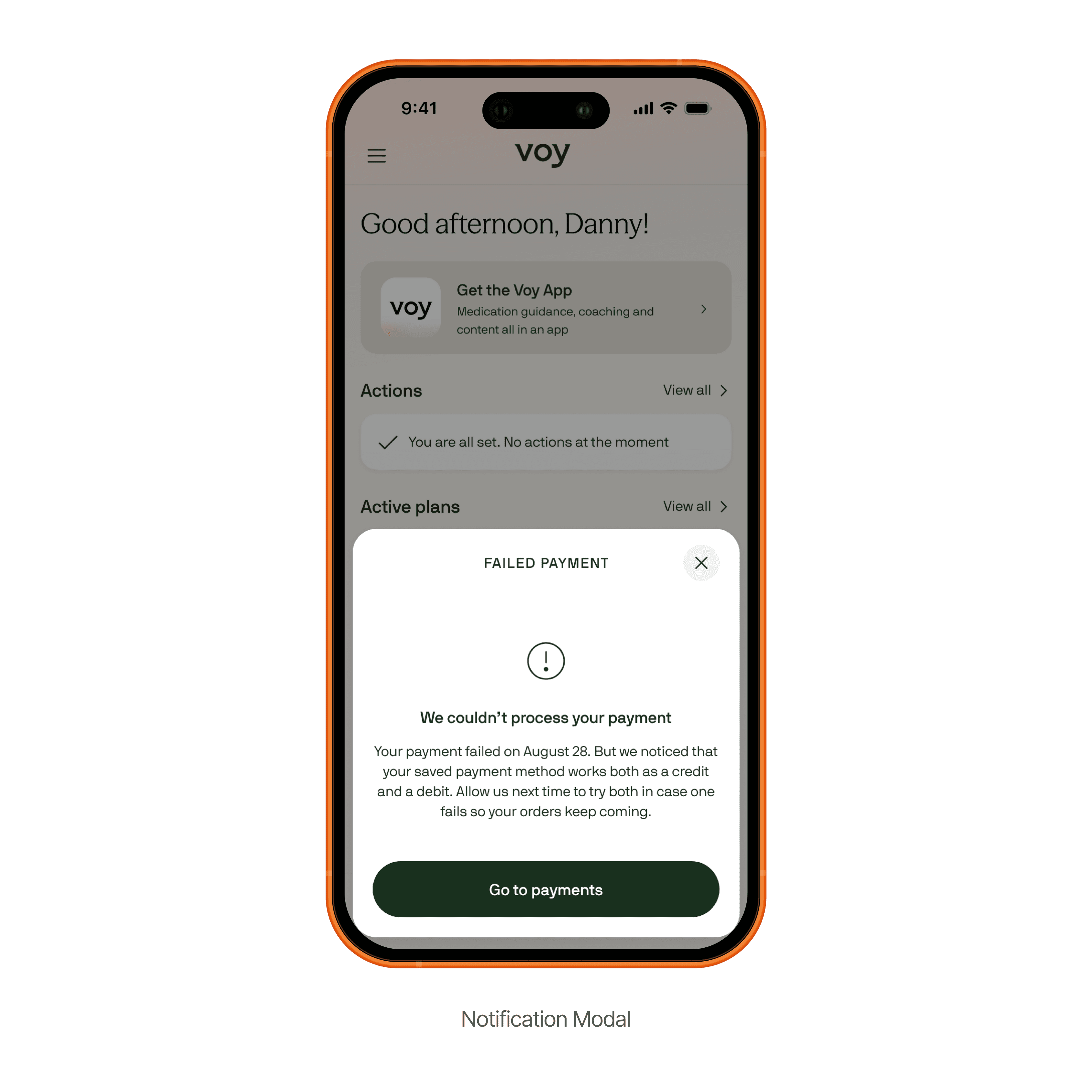
We improved payment failure notifications
We redesigned how payment failures were communicated, by:
Designing in-account notifications
Aligning CRM messaging with in-product actions
Reducing ambiguity around what failed and what to do next
Our goal was simple:
No surprises. No dead ends.
Are you wondering as well how this performed?
Well, the impact was immediate and measurable.
For the 1st month only, the revenue recovered was:
BR $1.26 million
UK £724 thousands
Order cancellation rate improvements were:
Voy BR: 28% → 14%
Voy UK: 5% → 2%
This confirmed that visibility + patient control beats silent automation when it comes to payments.
TL;DR
By introducing self-serve payment recovery and clear payment failure notifications, we significantly reduced order cancellations caused by failed payments and recovered £724k (UK) and $1.26m (BR) in revenue in a single month.
Cancellation drop rates:
Voy BR: from 28% → 14%
Voy UK: from 5% → 2%
This work laid the foundation for a scalable payments experience and marked the first major initiative of the newly formed Payments Squad.
Let me set the scene first
Voy is a healthtech company offering subscription-based treatments across multiple markets. Payments are mission-critical: if a payment fails, treatment stops and so does the revenue.
As the business scaled, payment failures became a growing problem:
Failed payments weren’t clearly surfaced to users
Recovery relied heavily on automated retries
After 30 days of failed attempts, subscriptions were cancelled automatically
This meant:
Customers were losing access to treatment
The business was losing revenue
Support teams were firefighting issues that users could have solved themselves
To address this, the company formed a dedicated Payments Squad for the first time, bringing together Product, Design and Engineering to rethink the entire payment recovery experience.
My role
As the Product Designer of this Squad, I:
Researched the best-in-class payment recovery patterns across SaaS, fintech and subscription products
Defined the IA and UX for the new Billing & Payments page
Worked closely with 1 PM, 2 Backend Engineers and 1 Frontend Engineer
Iterated designs based on technical feasibility and rollout strategy across markets
This was the first time a feature would launch across categories and brands.
The problem
Once a payment failed, users had very little visibility or control.
What was happening:
The system attempted auto-retries in the background, and at that moment those retries where not "smart" ones
Users were often unaware their payment had failed
There was no place to manage payment methods or retry a failed payment
After 1 month, the order was cancelled
Hypothesis
If users are:
Clearly informed when a payment fails
Given control to retry with a preferred payment method
Provided with a dedicated, easy-to-find space to manage billing and payments
Then:
Fewer orders will be cancelled
Recovery rates will increase
Support dependency will decrease
Seems big of an issue, right? Let's dive into the solutions 👇
We created a new “Billing & Payments” space
We introduced a dedicated section in the web app where users could:
View all saved payment methods
See their default payment method
Check their payment history
Identify a failed payment
Retry a failed payment using a method of their choice
This shifted payments from a hidden system process to a transparent, user-controlled experience.
We enabled self-serve payment retries
Instead of waiting for auto-rescue to succeed (or lets be honest..to "fail silently"), users could now:
Act immediately after a payment failure
Switch payment methods without contacting support
Recover their orders before cancellation thresholds were reached
This was especially impactful for users with:
Expired cards
Insufficient funds
Bank authentication failures
We improved payment failure notifications
We redesigned how payment failures were communicated, by:
Designing in-account notifications
Aligning CRM messaging with in-product actions
Reducing ambiguity around what failed and what to do next
Our goal was simple:
No surprises. No dead ends.
Are you wondering as well how this performed?
Well, the impact was immediate and measurable.
For the 1st month only, the revenue recovered was:
BR $1.26 million
UK £724 thousands
Order cancellation rate improvements were:
Voy BR: 28% → 14%
Voy UK: 5% → 2%
This confirmed that visibility + patient control beats silent automation when it comes to payments.
