TL;DR
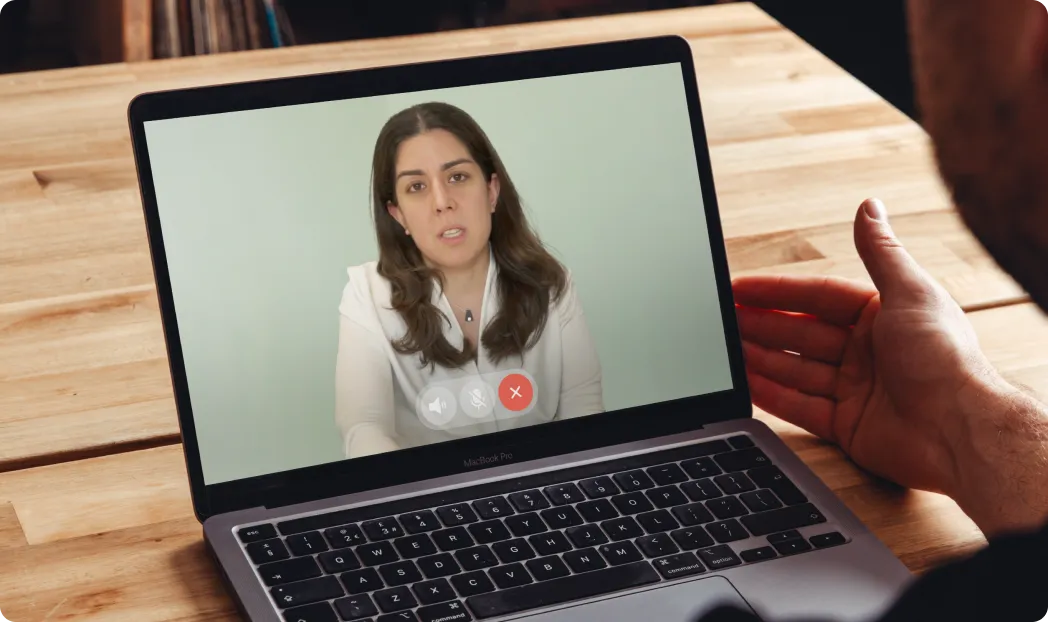
Doctors weren’t struggling with patients but with the system. So we run a research for 2 weeks and redesigned the internal patient profile used in order to help doctors focus less on screens and more on patients.
Let me set the scene first
The patient profile was meant to be the single source of truth for clinicians across TRT, WL, and HL teams. But instead of streamlining their workflow, it added friction. Doctors had to:
Jump between platforms to find key data
Use self-made templates to capture notes on Google Docs
Spend 5 to 10 minutes after each consult fixing documentation and transferring the data into the system
Work around non-editable notes, creating clinical risk
In other words, the system slowed our patients care down.
My role
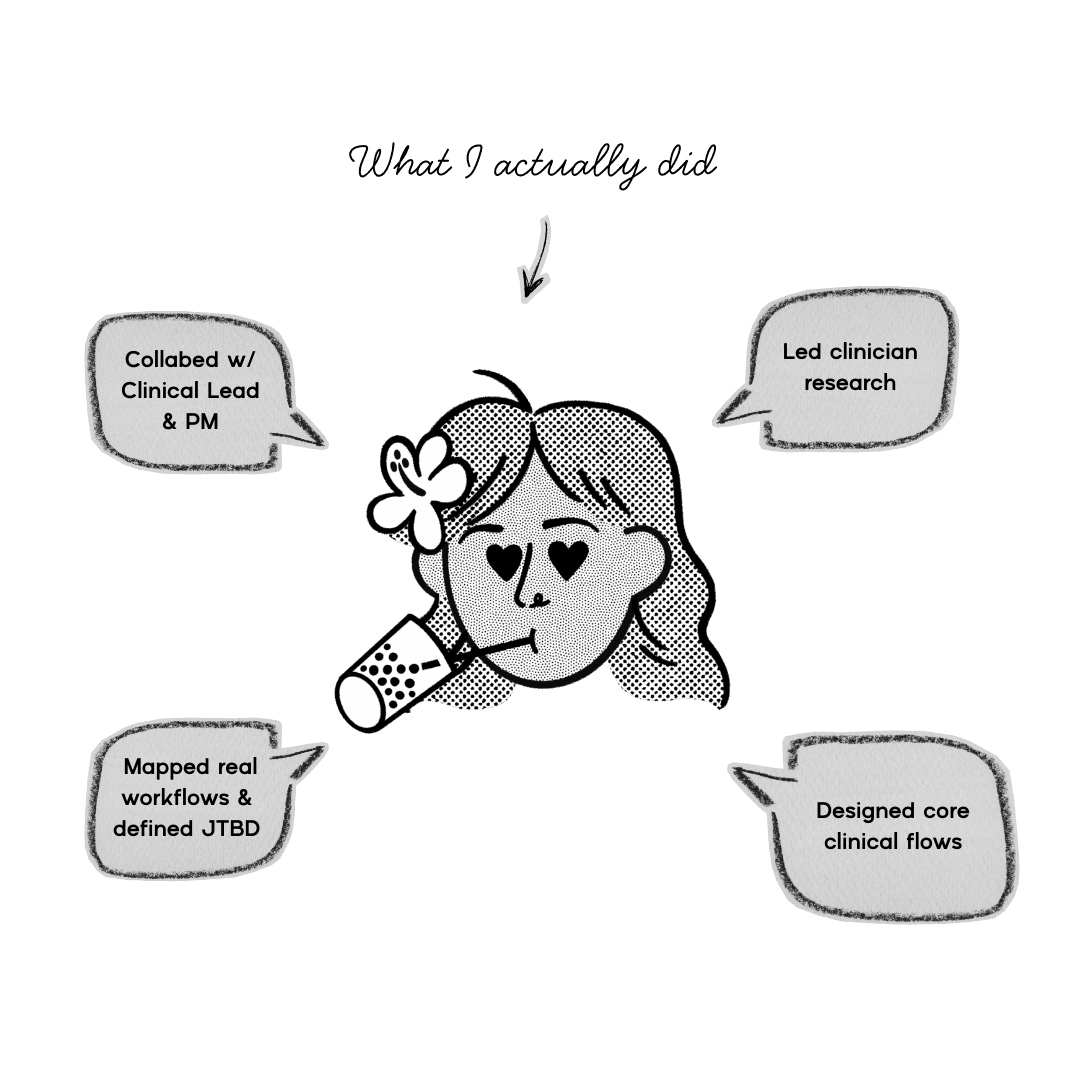
I led user research, synthesis, IA, and core flow design, collaborating closely with the Clinical Lead and PM to ensure speed without compromising patient safety.
Goal
Reduce drastically the time it takes for doctors to complete key actions during initial consultations, without compromising accuracy or safety of patients.
Research & Synthesis
We interviewed 7 clinicians to unpack what really happens during a consultation.
Research goals
Understand how the profile is used prior, during, and post consultations
Identify pain points, inefficiencies, and risky workarounds
Identify needs across different care areas (TRT, WL, HL)
We asked
How doctors prepare for a patient consult
Which data they need & how they access it
How they document & what slows them down
Their ideal flow if nothing was in the way
Key insight:
Platform switching
Doctors toggled between systems to gather patient data, losing timePoor Data Hierarchy
Frequently needed information was buriedNo edit capabilities
Clinicians left corrective info as separate notes because the system didn’t allow edits.Lack of in-context communication, more manual workflows
Updates or flags weren’t visible within the patient profile, causing extra steps
In other words, the profile should be their cockpit. But it wasn’t even close.
Jobs to be done & Information architecture
Along with the Clinical Lead, we interviewed 7 TRT doctors and Clinicians in order to better understand their role and what is happening during a consultation.
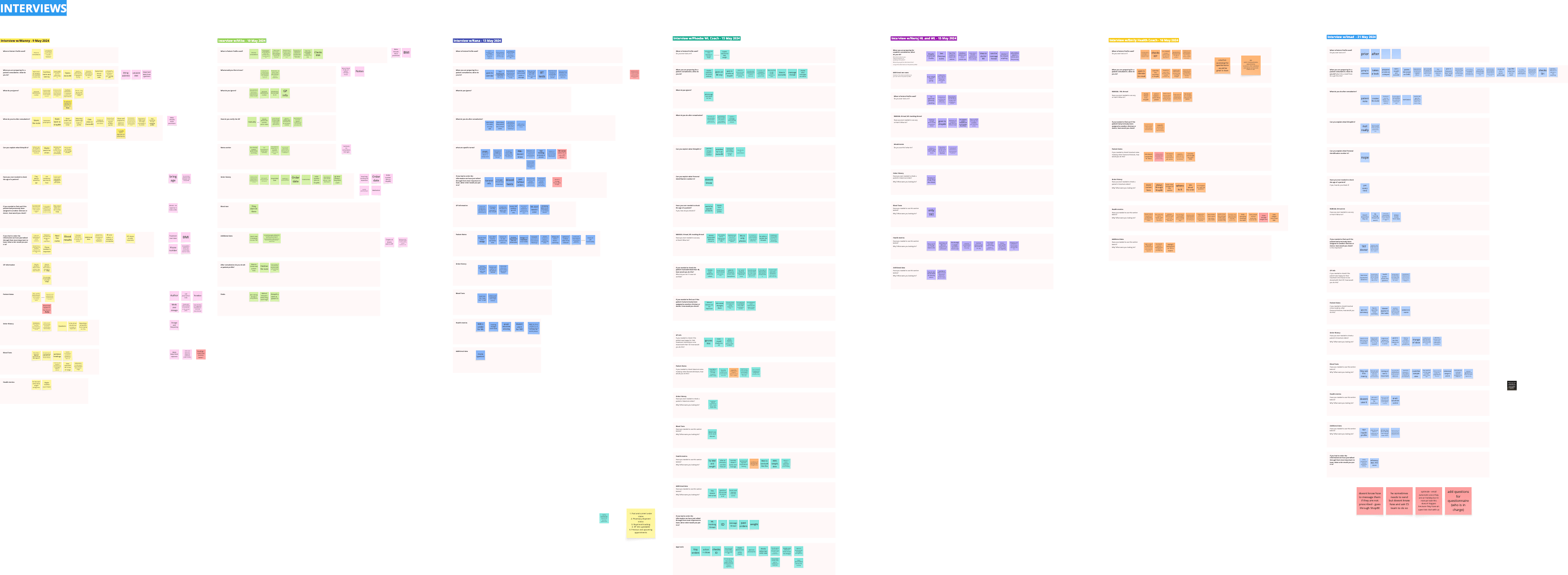
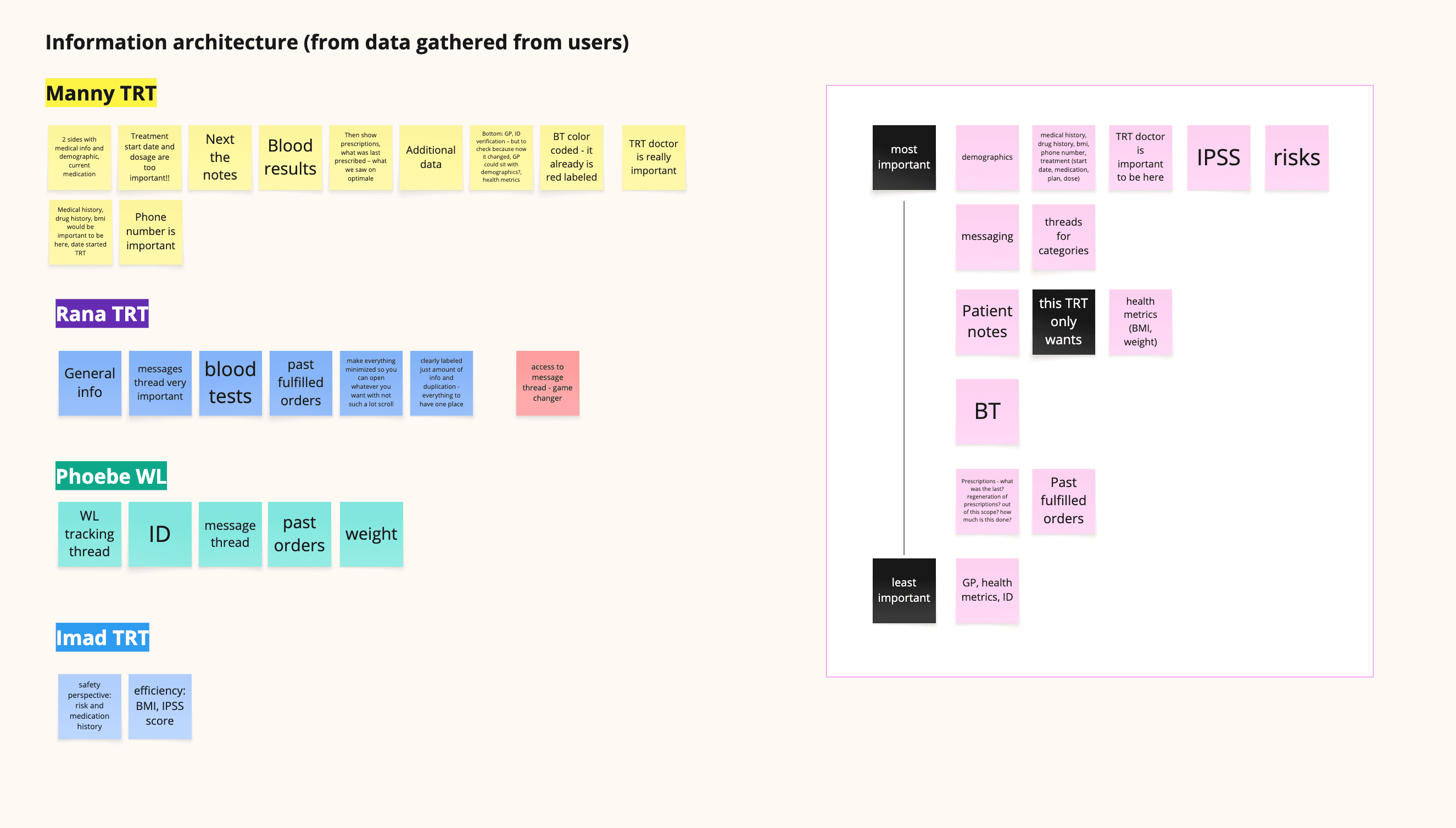
We clustered user observations into categories.

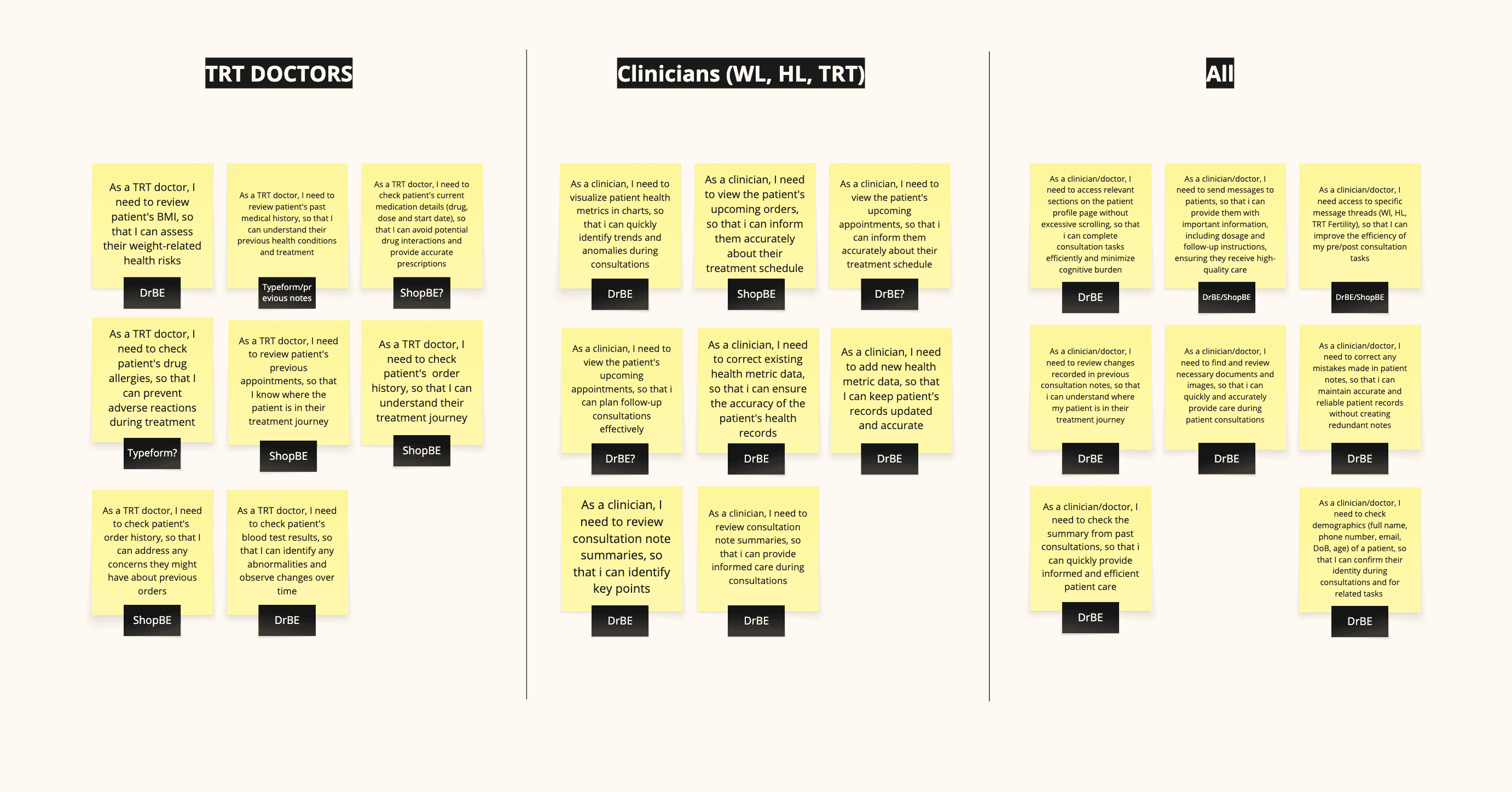
We mapped Jobs to Be Done and defined core clinician needs.
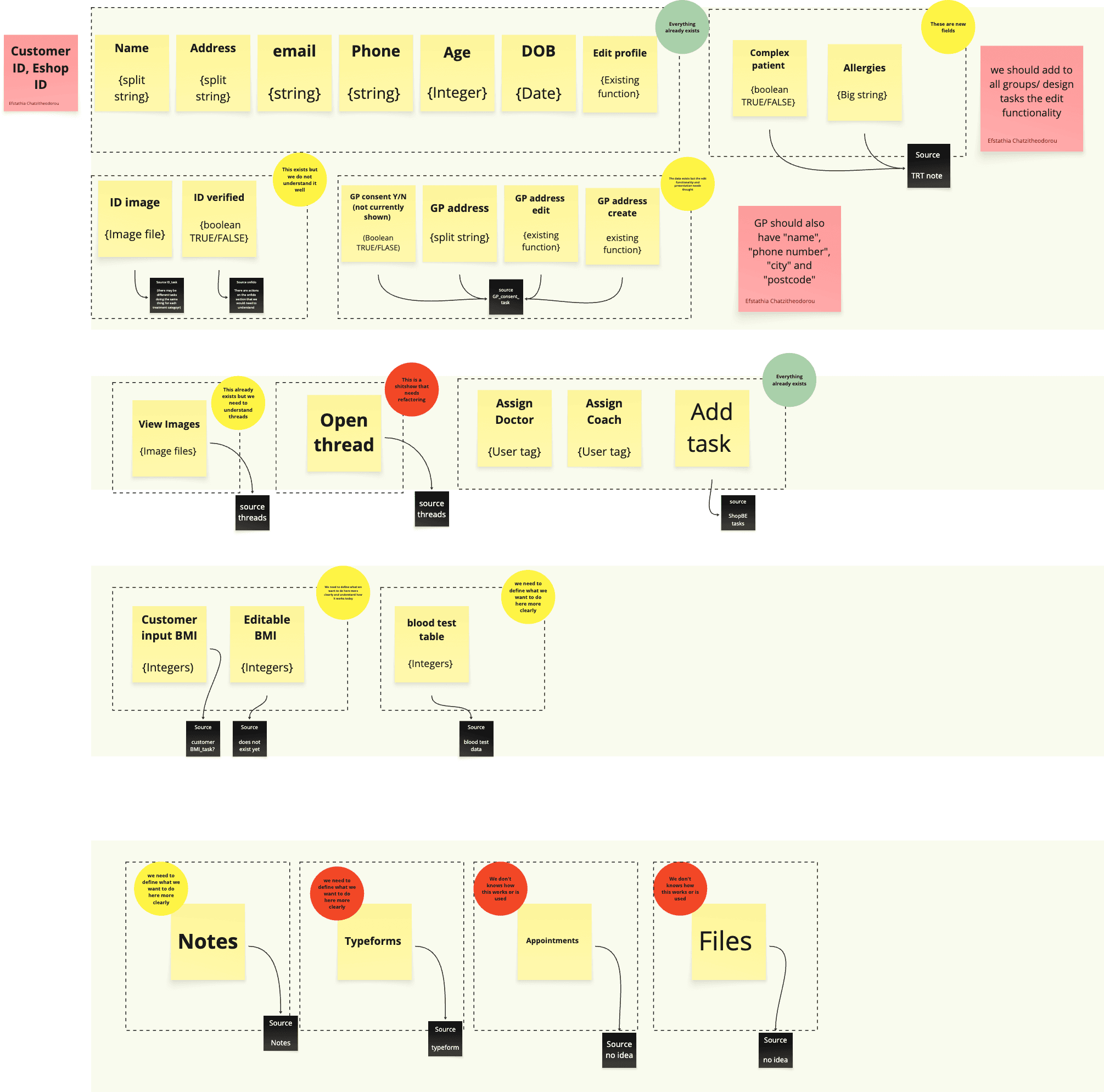
We worked on the Information Architecture of the new patient profile page in order to meet the needs of the doctors and clinicians:
Grouped data by relevance to phases of consultation
Moved urgent/critical info to the top
Collapsed or deprioritised low-impact data
How we worked
Mapped pre / during / post flows as independent design tasks
Iterated live in Miro with Clinical Lead feedback
Scoped designs with PM before engineering handoff
Paired design reviews with a peer for critique
Impact
~ 7 minutes saved per consultation, especially in preparation and post-doc documentation → This was validated through consistent feedback from clinicians and doctors, indicating reduced workflow friction and lower cognitive load.
More patient focus during consultations → Clinicians spent less time on screens and more on patients
Fewer manual workarounds → Editable, centralised notes lowered the error risk and improved clinical safety.
Higher trust in system data → Clinicians relied on the profile as a single source of truth, rather than external documents.
Less external coordination → In-profile messaging reduced external coordination
By strategically redesigning the internal patient profile, we shifted time back to clinicians and improved the system’s role as a true support system rather than an administrative burden.
TL;DR
Doctors weren’t struggling with patients but with the system. So we run a research for 2 weeks and redesigned the internal patient profile used in order to help doctors focus less on screens and more on patients.
Let me set the scene first
The patient profile was meant to be the single source of truth for clinicians across TRT, WL, and HL teams. But instead of streamlining their workflow, it added friction. Doctors had to:
Jump between platforms to find key data
Use self-made templates to capture notes on Google Docs
Spend 5 to 10 minutes after each consult fixing documentation and transferring the data into the system
Work around non-editable notes, creating clinical risk
In other words, the system slowed our patients care down.
My role
I led user research, synthesis, IA, and core flow design, collaborating closely with the Clinical Lead and PM to ensure speed without compromising patient safety.
Goal
Reduce drastically the time it takes for doctors to complete key actions during initial consultations, without compromising accuracy or safety of patients.
Research & Synthesis
We interviewed 7 clinicians to unpack what really happens during a consultation.
Research goals
Understand how the profile is used prior, during, and post consultations
Identify pain points, inefficiencies, and risky workarounds
Identify needs across different care areas (TRT, WL, HL)
We asked
How doctors prepare for a patient consult
Which data they need & how they access it
How they document & what slows them down
Their ideal flow if nothing was in the way
Key insight:
Platform switching
Doctors toggled between systems to gather patient data, losing timePoor Data Hierarchy
Frequently needed information was buriedNo edit capabilities
Clinicians left corrective info as separate notes because the system didn’t allow edits.Lack of in-context communication, more manual workflows
Updates or flags weren’t visible within the patient profile, causing extra steps
In other words, the profile should be their cockpit. But it wasn’t even close.
Jobs to be done & Information architecture
Along with the Clinical Lead, we interviewed 7 TRT doctors and Clinicians in order to better understand their role and what is happening during a consultation.
We clustered user observations into categories.
We mapped Jobs to Be Done and defined core clinician needs.
We worked on the Information Architecture of the new patient profile page in order to meet the needs of the doctors and clinicians:
Grouped data by relevance to phases of consultation
Moved urgent/critical info to the top
Collapsed or deprioritised low-impact data
How we worked
Mapped pre / during / post flows as independent design tasks
Iterated live in Miro with Clinical Lead feedback
Scoped designs with PM before engineering handoff
Paired design reviews with a peer for critique
Impact
~ 7 minutes saved per consultation, especially in preparation and post-doc documentation → This was validated through consistent feedback from clinicians and doctors, indicating reduced workflow friction and lower cognitive load.
More patient focus during consultations → Clinicians spent less time on screens and more on patients
Fewer manual workarounds → Editable, centralised notes lowered the error risk and improved clinical safety.
Higher trust in system data → Clinicians relied on the profile as a single source of truth, rather than external documents.
Less external coordination → In-profile messaging reduced external coordination
By strategically redesigning the internal patient profile, we shifted time back to clinicians and improved the system’s role as a true support system rather than an administrative burden.
