
TL;DR
With the help of this test, we reduced cancellations by 3.5% between cohorts.
Firstly, let me set the scene
MANUAL is a London based health-tech brand with a goal to help people take better care of themselves, in various way, such as by tackling Hair Loss, Weight Loss, Erectile Dysfunction, Testosterone Replacement Therapy and Menopause. We do this through our website, where customers visit, select a health category they need help with, take a quiz, and then we recommend a treatment for them, which they can purchase either as a one-off or as a subscription, depending on the category. Up until now, HL is our top-performing category, with WL and TRT following closely.
So what about cancellations?
Being part of the "Support and Retain" team, meant that cancelations were at the heart of what we did. So, while we were trying to tackle them and better understand the behavior of our customers, we noticed something interesting. Move delivery was the most used action in the cancellation flow. But thing is that we were hiding it behind several clicks in the cancelation flow and the UX was suboptimal.
Hypothesis
Didn't take us long to decide to play the game differently. We thought that by making the Move delivery functionality more prominent would increase the number of customers who try to move their order instead of cancelling. And guess what...it actually did! (but keep reading👀)
What did we actually do?
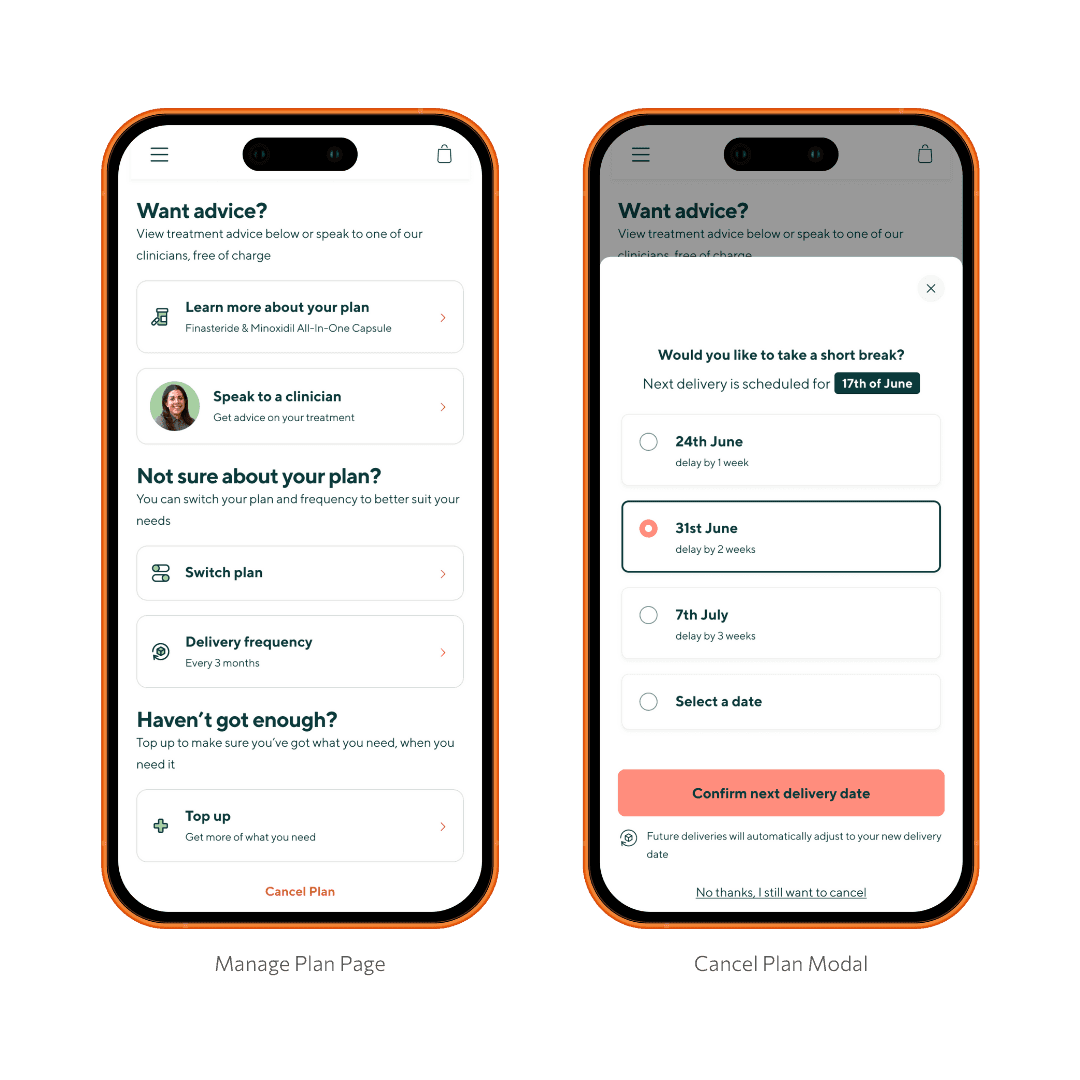
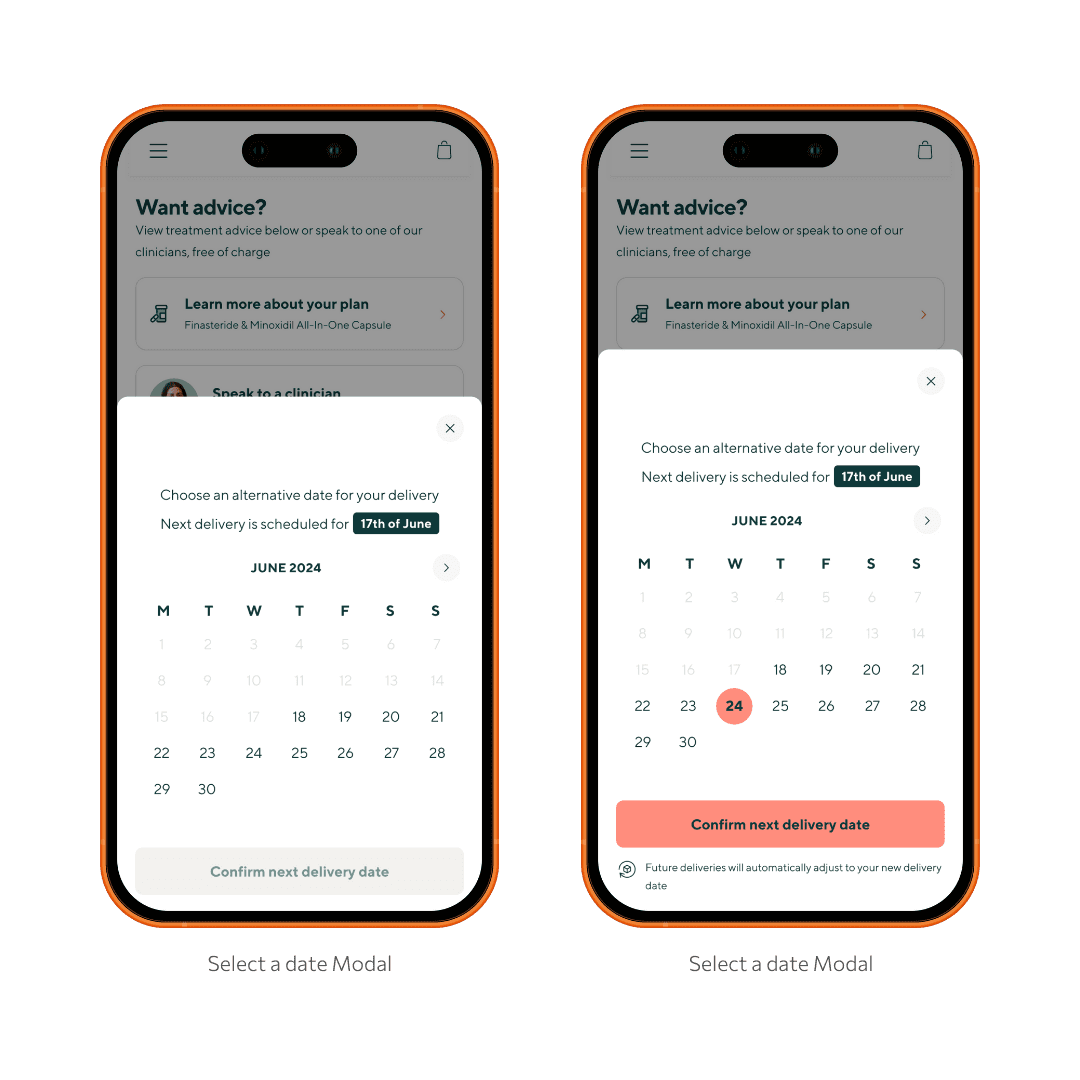
We decided to trigger the Move delivery functionality as soon as they click Cancel plan in order to create a prominent intervention. We positioned it as Taking a short break in order for customers to feel like they were stopping their treatment for a while. This way users could move their order easily or proceed down the cancellation path.
How did it perform?
The news were great! We saw a 3.5% decrease in subscription cancellation rate between the two cohorts.
Based on data available, it looked like this was predominantly driven by:
customers that would have otherwise selected as cancellation reason
overstockedbut there were also drops in the reasons
my plan is too expensiveandI am experiencing side effects
TL;DR
With the help of this test, we reduced cancellations by 3.5% between cohorts.
Firstly, let me set the scene
MANUAL is a London based health-tech brand with a goal to help people take better care of themselves, in various way, such as by tackling Hair Loss, Weight Loss, Erectile Dysfunction, Testosterone Replacement Therapy and Menopause. We do this through our website, where customers visit, select a health category they need help with, take a quiz, and then we recommend a treatment for them, which they can purchase either as a one-off or as a subscription, depending on the category. Up until now, HL is our top-performing category, with WL and TRT following closely.
So what about cancellations?
Being part of the "Support and Retain" team, meant that cancelations were at the heart of what we did. So, while we were trying to tackle them and better understand the behavior of our customers, we noticed something interesting. Move delivery was the most used action in the cancellation flow. But thing is that we were hiding it behind several clicks in the cancelation flow and the UX was suboptimal.
Hypothesis
Didn't take us long to decide to play the game differently. We thought that by making the Move delivery functionality more prominent would increase the number of customers who try to move their order instead of cancelling. And guess what...it actually did! (but keep reading👀)
What did we actually do?
We decided to trigger the Move delivery functionality as soon as they click Cancel plan in order to create a prominent intervention. We positioned it as Taking a short break in order for customers to feel like they were stopping their treatment for a while. This way users could move their order easily or proceed down the cancellation path.
How did it perform?
The news were great! We saw a 3.5% decrease in subscription cancellation rate between the two cohorts.
Based on data available, it looked like this was predominantly driven by:
customers that would have otherwise selected as cancellation reason
overstockedbut there were also drops in the reasons
my plan is too expensiveandI am experiencing side effects
